Before
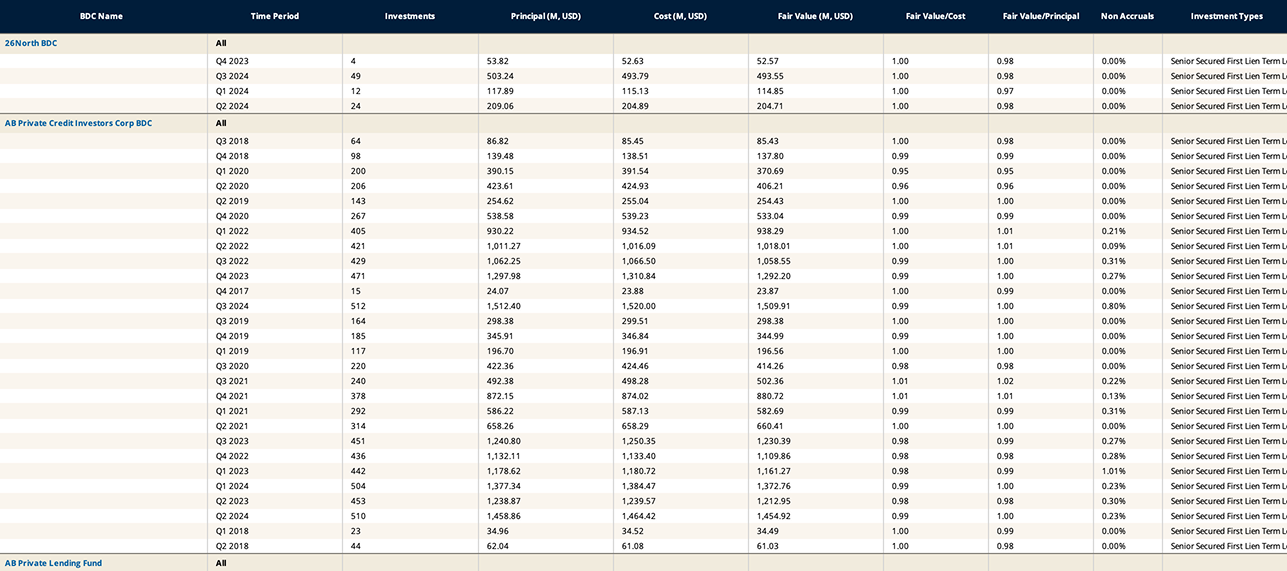
The BDC Holdings data as it existed before the dashboard
I joined PitchBook as the first design hire in New York, leading design across a portfolio of teams including Credit. PitchBook had acquired LCD (Leveraged Commentary and Data) from S&P Global two years earlier, bringing valuable leveraged loan and credit market data into the platform. Most of that data lived outside the platform in spreadsheets and PDFs. As we moved it into the database, we could finally build the interactive products analysts actually needed.
The Credit team had made significant progress since the LCD acquisition, moving well beyond the initial integration work. They had built strong data coverage and had an established user base in the leveraged loan and credit markets.
The next step was to build dedicated interactive dashboards that gave analysts a real product experience. We started with two large and regularly updated datasets: CLO (Collateralized Loan Obligations) and BDC (Business Development Companies).
The BDC Holdings data as it existed before the dashboard
When I joined, the Credit team didn't have a designer. With a backlog of work already in motion, I quickly onboarded a contractor to design the CLO dashboard and worked closely alongside them, setting direction and running critique throughout. When that engagement ended, I helped transition the work and brought on a full-time designer for Credit to work on the BDC dashboard. After a team restructure, I stepped back in to continue that work directly.
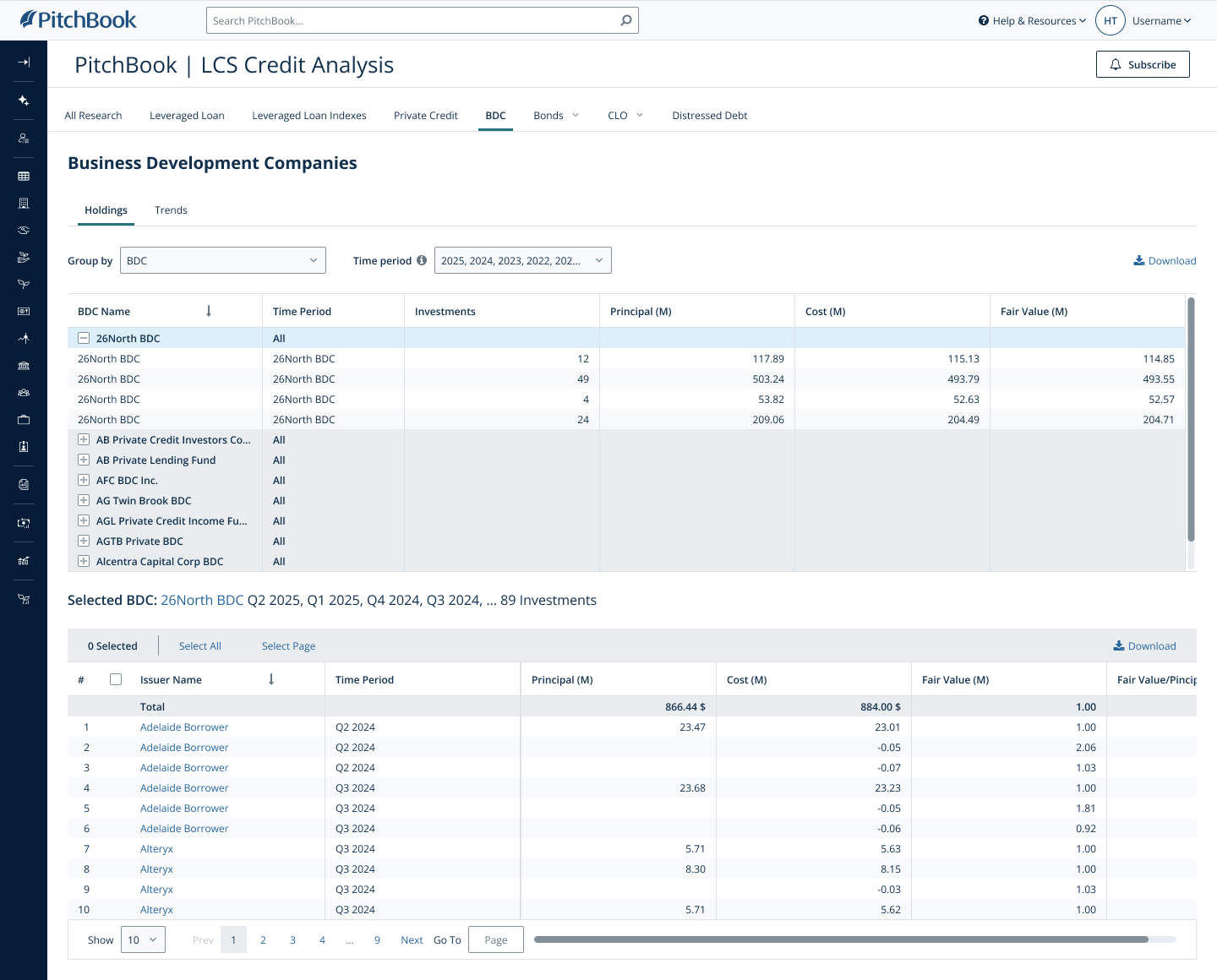
The BDC Universe dashboard
Credit analysts aren't looking for simplified dashboards. They want the full data: filterable, comparable, and exportable for downstream models. The design had to respect that, while making it genuinely faster to get to answers.
The BDC market is under pressure. Rising defaults, interest rate cuts squeezing net income, and high redemption requests are creating volatility across the sector. In that environment, analysts need granular, current data to understand which BDCs are exposed and which are holding up.
This is the environment where a comprehensive, current BDC holdings dataset goes from useful to essential. PitchBook has the data and the dashboard to support it. The work now is making sure analysts know where to find it.
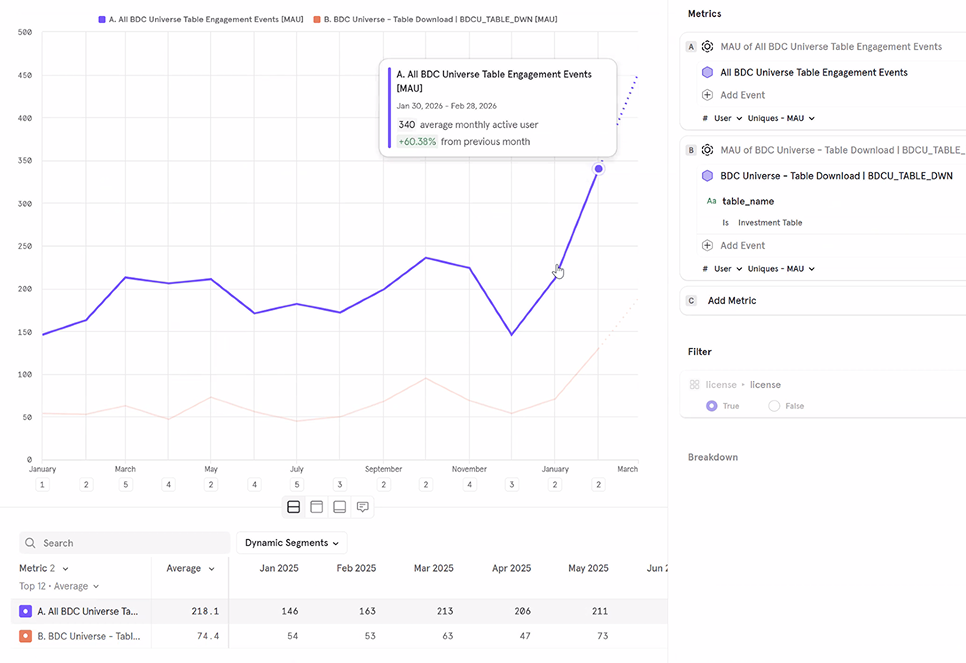
BDC Universe monthly active users, January 2025 to February 2026.
The engagement data tells a clear story: when analysts find the BDC Universe, they use it and come back. Monthly actives are up sharply. But the addressable pool of credit users who should be using these tools remains largely untouched.
The goal for 2026 is to grow active user share in the accounts most likely to benefit and deepen engagement in the segments that rely on BDC and CLO data most.
I'm currently working hands-on with the PM on the BDC dashboard, adding trend visualizations and BDC-to-BDC comparison functionality to give analysts a stronger reason to engage each quarter when new filings drop.
But building the product is only part of the challenge. The bigger opportunity is discoverability. We are repositioning the BDC dashboard as a relaunch, working closely with marketing and account managers to make sure the right analysts know it exists. A lot of the work is done. Now we need to make sure people find it.
CLO and BDC data that lived in spreadsheets and PDFs is now an interactive, filterable dashboard built for how credit analysts actually work. Engagement is growing, the product is solid, and the team is aligned on what comes next.